Connecting Community, Care and Improvement:
Meet Christie Lockhart

![]()
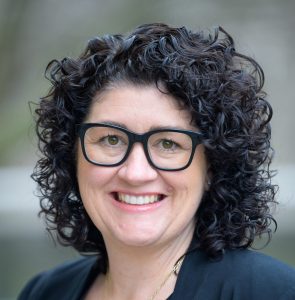
As Michael Garron Hospital (MGH) joins the Centre for Quality Improvement and Patient Safety (CQuIPS) as its newest partner organization, Christie Lockhart is stepping into the role of Associate Director, bringing valuable perspective shaped by clinical practice, quality improvement, research, health equity and deep connections to East Toronto.
A midwife who has worked in East Toronto since 2007, Christie has built a career involved in frontline care, innovation and health system leadership. Her work has taken her across hospital and community settings, from labour and delivery at MGH to the Toronto Birth Centre, patients’ homes and the Thorncliffe Park Hub. That experience has shaped how she thinks about quality and safety: not simply as what happens within a hospital, but as something experienced across an entire care journey.
As CQuIPS’ partnership grows, Christie sees an opportunity to strengthen improvement capacity across professions, bring a community hospital perspective more fully into the QIPS conversation, and deepen connections with patients, families and communities.
We spoke with Christie about the perspective she brings to CQuIPS, what MGH can contribute to the broader QIPS community, and where she sees opportunities to advance the field.
How has your experience as a midwife shaped the way you think about quality improvement and patient safety?
For Christie, midwifery and quality improvement share an important foundation: relationships. Working across home, community and hospital settings has given her a close view of how patients experience the healthcare system and where barriers emerge along the way. “The people who experience the inefficiencies in our system, or experience harm, have a valuable perspective that we can often miss as providers unless we are purposefully including them,” she says. Midwifery’s emphasis on listening, shared decision-making and informed choice continues to shape the patient-centred lens she brings to QIPS.
What opportunities do you see for the CQuIPS–MGH partnership to strengthen improvement capacity across professions?
Christie sees a major opportunity to make quality improvement more accessible across MGH. “There are many people with great ideas,” she says, including nurses, midwives, physicians, allied health staff and learners. “Not all of them have had formal training, mentorship or protected time to carry an idea through to real change.”
CQuIPS can help bridge that gap through education, mentorship and connection to a broader QIPS network. Christie also hopes the partnership will help MGH teams better evaluate, share and spread practical improvement work developed in a community hospital setting.
What can MGH’s perspective as a large community teaching hospital contribute to the broader CQuIPS community?
Serving a diverse population across East Toronto, MGH brings strong connections to primary care, community organizations and the realities of improving care within everyday constraints. “We often have to improve with fewer dedicated resources than large academic centres,” Christie says. “That pushes us to be practical and creative.”
As a teaching hospital, MGH also helps learners see improvement as part of everyday clinical practice. Christie believes this perspective can help ensure CQuIPS approaches remain relevant across different care environments.
How can MGH’s relationships across East Toronto broaden who participates in and benefits from the CQuIPS community?
MGH works closely with primary care, Ontario Health Team partners, community health centres, social service agencies and community organizations across East Toronto. Connecting these partners more closely with CQuIPS could broaden both who participates in improvement and the issues the network addresses. “Quality improvement and patient safety doesn’t begin and end at hospital admission and discharge,” Christie says.
She hopes to see more learning opportunities and joint projects that span the full care journey, while continuing to involve patients and communities as partners from the outset.
Where does the QIPS field need to push its thinking over the next several years?
Christie believes equity needs to continue to be a core part of how quality and safety are understood and measured, and improved. As we continue to broaden how we define harm, recognizing emotional, psychological, cultural and access-related harms that may not appear in traditional safety reporting, this will push us to think about both harm and solutions differently.
At the same time, sustainable improvement cannot depend on stretched clinicians continuing to take on more work. Better access to data, analytics and emerging tools with artificial intelligence will support new ways of working and will expand our capabilities; ensuring they are introduced purposefully and with patient and provider input and expertise.
What would a successful CQuIPS–MGH partnership look like three years from now?
Christie hopes to see more MGH staff, physicians and learners participating in CQuIPS programs and taking on improvement leadership roles, along with projects that are evaluated and shared beyond MGH. Most importantly, she wants patients and communities in East Toronto to be active partners in the work and to see a meaningful difference in their care.
Ultimately, success would be reflected in strong, lasting relationships between MGH and the broader CQuIPS community, with the partnership becoming a natural and established part of the network.
Congratulations Christie – and welcome to the CQuIPS family!